
Single Pole Single Throw (SPST) Switch
Understanding the fundamentals of electrical switching
What is an SPST Switch?
A Single Pole Single Throw (SPST) switch is the simplest type of electrical switch. It has two terminals and can either complete or break a single electrical circuit. The switch controls one circuit (single pole) and has one position it can switch to (single throw).
Key Characteristics:
- Two terminals only
- ON/OFF operation
- Controls single circuit
- Simple make-or-break contact
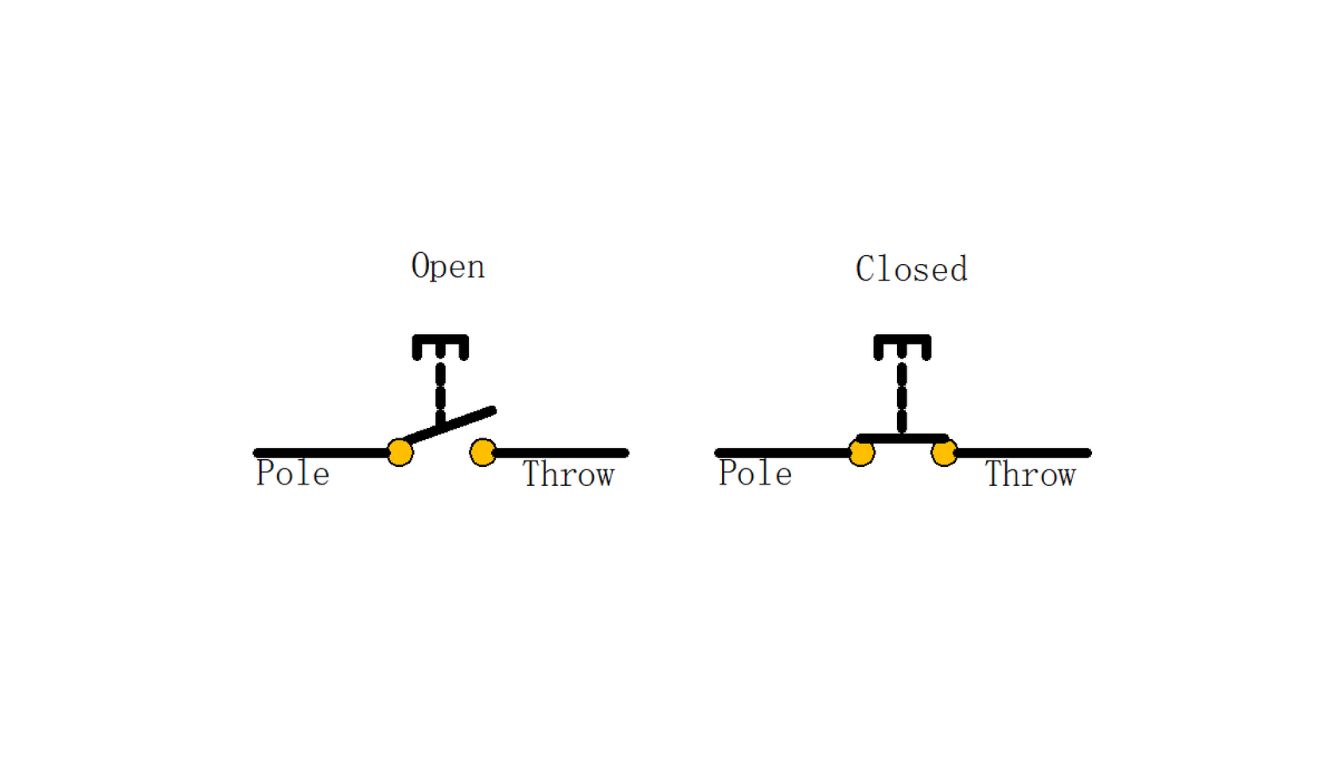
How It Works
When the switch is in the ON position, it creates a complete electrical path allowing current to flow. In the OFF position, it breaks the circuit, stopping current flow.
Common Types
- • Toggle switches
- • Rocker switches
- • Push button switches
- • Slide switches
Applications
- • Light switches
- • Power switches
- • Electronic devices
- • Automotive controls
Circuit States
CLOSED (ON) State
Switch contacts are connected, creating a complete circuit path. Current flows through the switch.
OPEN (OFF) State
Switch contacts are separated, breaking the circuit. No current can flow through the switch.
Advantages of SPST Switches
- Simple and reliable design
- Cost-effective solution
- Easy to install and wire
- Low maintenance requirements
- Wide variety of styles available
- Suitable for many applications
Safety Note
Always ensure proper electrical ratings and follow local electrical codes when installing switches. Consult a qualified electrician for high-voltage applications.