
What is a Double Pole Single Throw (DPST) Switch?
A Double Pole Single Throw (DPST) switch is an electrical switch that controls two separate circuits simultaneously, with each pole having one "throw" or connection position.
Understanding DPST Switch Configuration
Key Components
- Double Pole: Two separate switching mechanisms
- Single Throw: One connection position per pole
- Four Terminals: Two input and two output connections
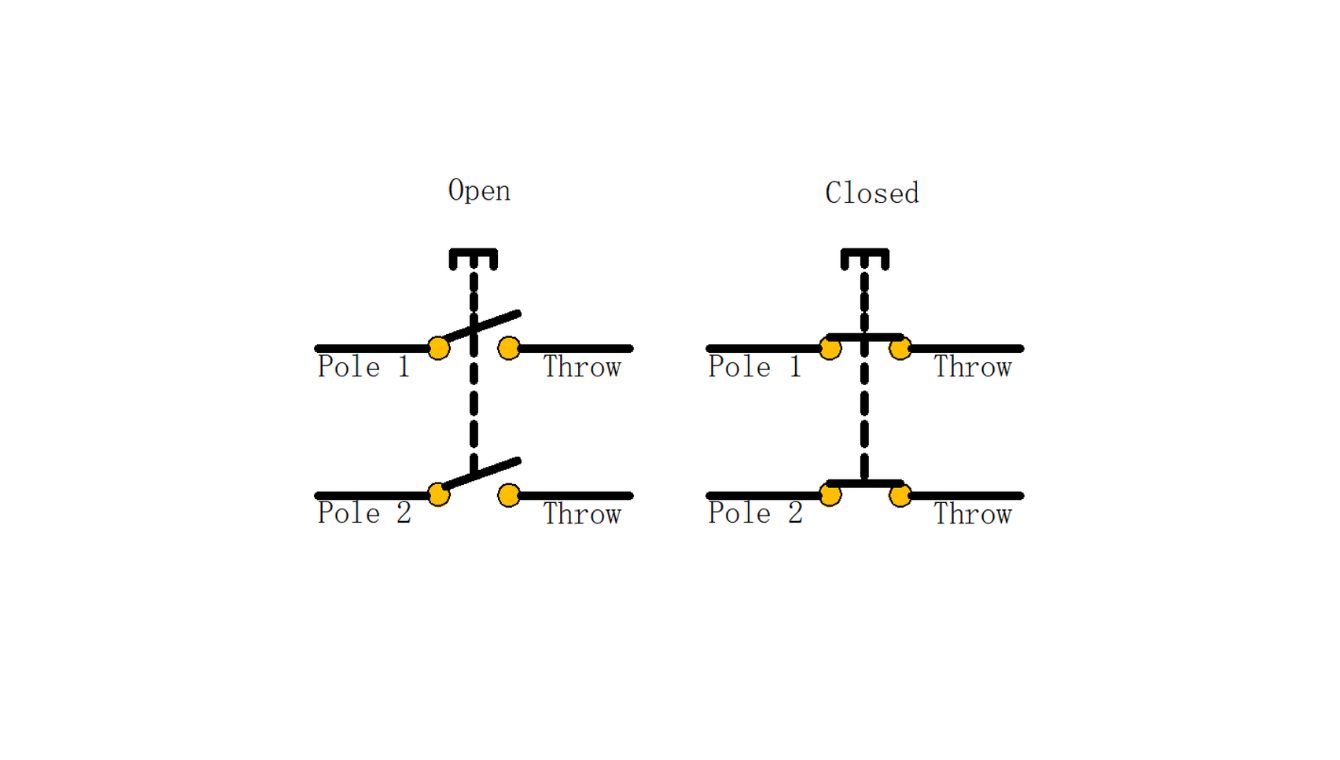
DPST Switch Circuit Configuration
How DPST Switches Work
Operating Principle
A DPST switch operates both poles simultaneously with a single actuator. When activated, it either connects or disconnects two separate circuits at the same time, making it ideal for controlling devices that require complete isolation from power sources.
Closed Position (ON)
Both circuits are connected, allowing current flow through both poles simultaneously.
Open Position (OFF)
Both circuits are disconnected, completely isolating the load from the power source.
Common Applications
Electrical Appliances
Main power switches for appliances requiring complete disconnection from both hot and neutral lines.
Heating Systems
Control circuits for electric heaters, ensuring safe disconnection of both power lines.
Industrial Equipment
Safety switches in industrial machinery for emergency stops and maintenance isolation.
Advantages of DPST Switches
Safety Benefits
- Complete circuit isolation
- Simultaneous dual-circuit control
- Reduced risk of electrical shock
Practical Advantages
- Simple installation
- Cost-effective solution
- Reliable operation
DPST vs Other Switch Types
| Switch Type | Poles | Throws | Applications |
|---|---|---|---|
| DPST | 2 | 1 | Main power switches, safety applications |
| SPST | 1 | 1 | Simple on/off control |
| DPDT | 2 | 2 | Reversing circuits, changeover switching |
| SPDT | 1 | 2 | Three-way switching, selection circuits |
Installation and Safety Considerations
Important Safety Notice
Always consult a qualified electrician for installation. Ensure power is completely disconnected before working with electrical switches.
Installation Tips
- • Verify voltage and current ratings
- • Use appropriate wire gauge
- • Ensure proper grounding
- • Test operation before final installation
Maintenance
- • Regular visual inspection
- • Check for loose connections
- • Clean contacts if necessary
- • Replace if showing wear or damage